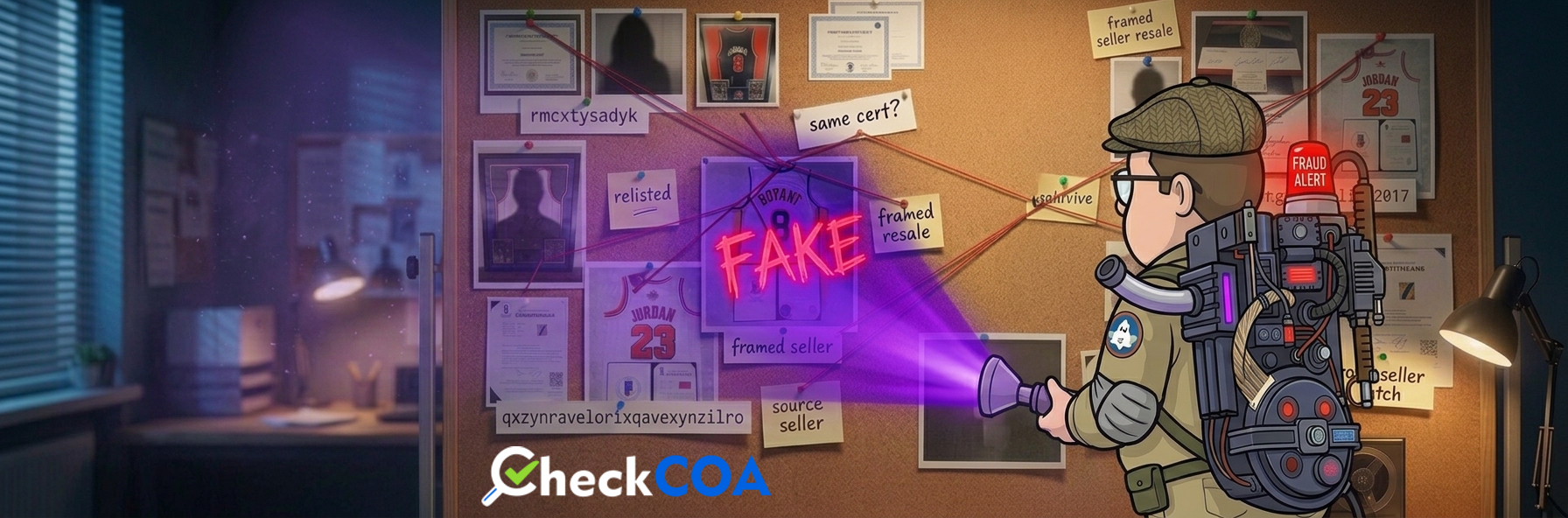
Why I Built CheckCOA - Founder Note by Roman Pioneer
Why I Built CheckCOA
Many of you already know me as Roman Pioneer from X, where I have been publishing investigations into fake autographs, bad certificates, and sellers abusing trust in the collectibles market.
Some of you may have first seen my work through the investigation into a Chinese memorabilia account operating at million-dollar scale. Others may have found CheckCOA through search while trying to verify a certificate before buying an autograph. Either way, welcome.
This is the first article on the CheckCOA blog, so I want to start with the story behind the project before publishing more investigations.
My Background
I have been collecting autographs for almost 20 years.
During that time, I learned the same lesson many serious collectors eventually learn: the certificate is important, but it is not enough.
A familiar logo does not automatically make an autograph real. A certificate number that appears in a database does not always mean the item in front of you is the item that was originally certified. A seller with good feedback can still sell bad material. And in many cases, buyers discover the problem only after the return window has already closed.
For years, I kept my own records of suspicious certificates, reused numbers, fake stickers, stolen items, and seller patterns. At first, it was just a private protection system for my own collecting. Over time, it became obvious that the same information could protect other collectors too.
That is how CheckCOA started.
What CheckCOA Does
CheckCOA is a certificate verification tool for collectors.
The goal is simple: make it faster to check certificates across major authentication companies and warn buyers when a number has been flagged as fake, stolen, reused, altered, or otherwise compromised.
The most important part of the service is the integrated Fraud Alert database. When a certificate number is connected to a known fraud pattern, CheckCOA can show a warning before a buyer sends money to a seller.
This does not replace expert autograph authentication. It is a safety layer.
It helps answer questions like:
Has this certificate number appeared in a known fake listing?
Has this number been reused by multiple sellers?
Was this item reported stolen?
Does the seller pattern match previous fraud cases?
Should I slow down before buying?
That last question matters more than people think. Most fraud succeeds because buyers move too quickly.
Why This Blog Exists
This blog will be the long-form home for my investigations and collector education.
On X, threads are fast and public. They are useful for warning people quickly, tagging platforms, and putting pressure on sellers, marketplaces, and authentication companies.
But some cases need more space.
Here I will publish:
Detailed seller investigations
Breakdowns of fake autograph patterns
Examples of abused certificate numbers
Notes on how scammers exploit PSA, Beckett, JSA, Fanatics, and other trust signals
Practical guides for collectors before buying autographs online
Updates on the CheckCOA Fraud Alert database
The focus will stay the same: evidence first, no unnecessary drama, and practical protection for collectors.
The Problem Is Bigger Than One Seller
Most people imagine autograph fraud as a single fake signature on a cheap photo.
The reality is more organized.
Scammers reuse real certificate numbers. They copy sticker formats. They steal photos from legitimate sellers. They sell fake items with old-looking certs to make them seem more believable. They build accounts with clean feedback because most victims do not realize what happened until much later.
Marketplaces are not built to catch this well. Feedback systems measure delivery satisfaction, not authenticity. A buyer can receive a fake autograph quickly, leave positive feedback, and accidentally make the seller look more trustworthy to the next victim.
That is the gap CheckCOA is trying to close.
What I Want Collectors To Do
Before you buy an autograph, slow down.
Check the certificate. Compare the signature. Look at the seller's other inventory. Ask why the price is low. Save screenshots. Do not let a familiar authentication logo do all the thinking for you.
And when you find something suspicious, report it.
CheckCOA will keep growing as more compromised certificates, stolen items, and seller patterns are documented. The stronger the database becomes, the harder it gets for the same bad numbers to keep circulating.
You can follow my ongoing investigations on X:
And you can verify certificates here:
This blog starts with one simple mission: help collectors avoid expensive mistakes before they happen.
Comments 0