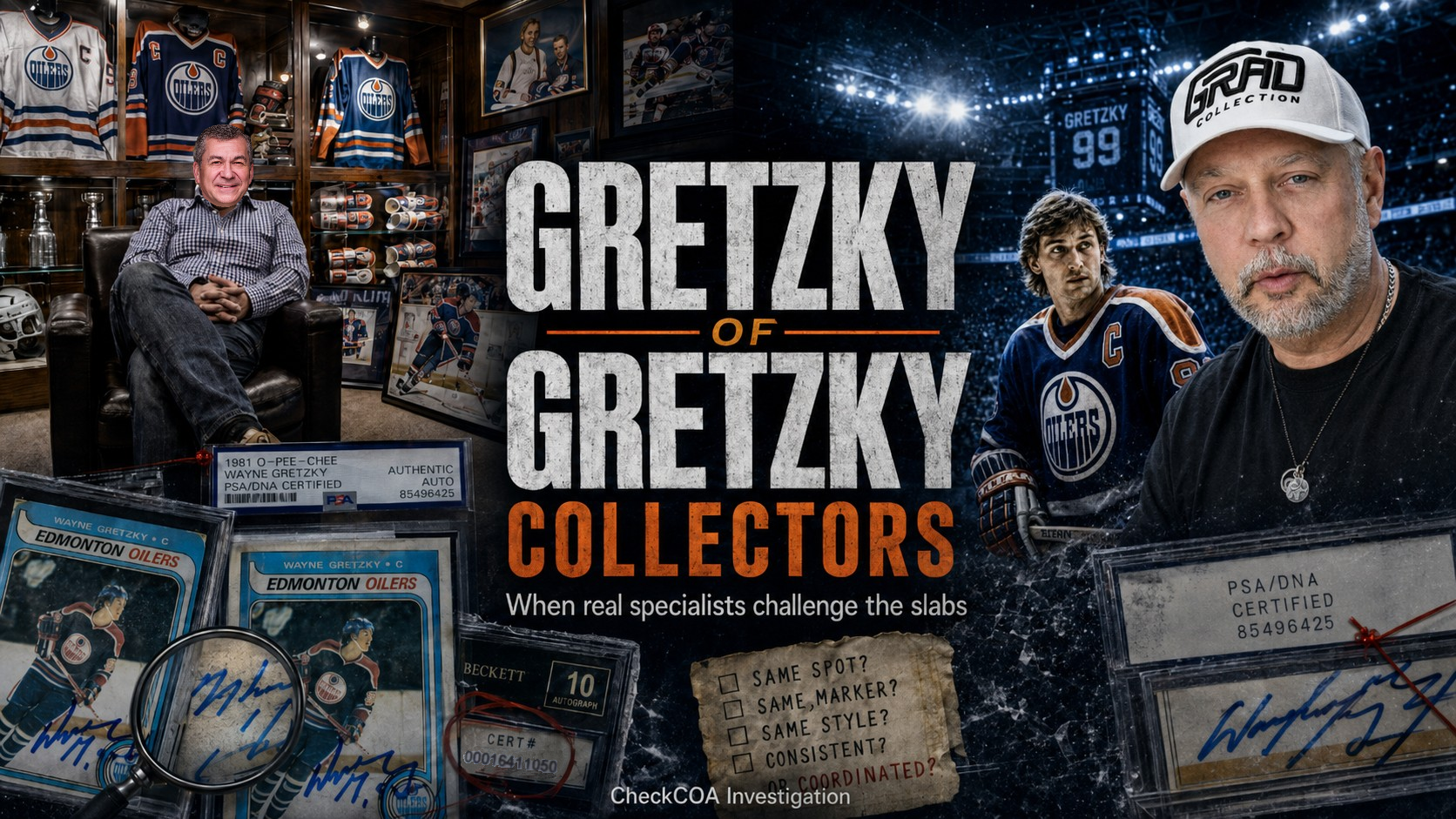
Wayne Gretzky Fake Autographs: Valid PSA and Beckett Slabs Are Not Enough
I have had this Wayne Gretzky case sitting in my draft folder for about a week. I kept meaning to write it up, but today Steve Grad dropped a new Gretzky autograph video, and the timing is too relevant to ignore.
This is exactly the kind of case CheckCOA was built for.
The dangerous sentence in the hobby is still:
"If the cert number checks out, you are safe."
That is not true.
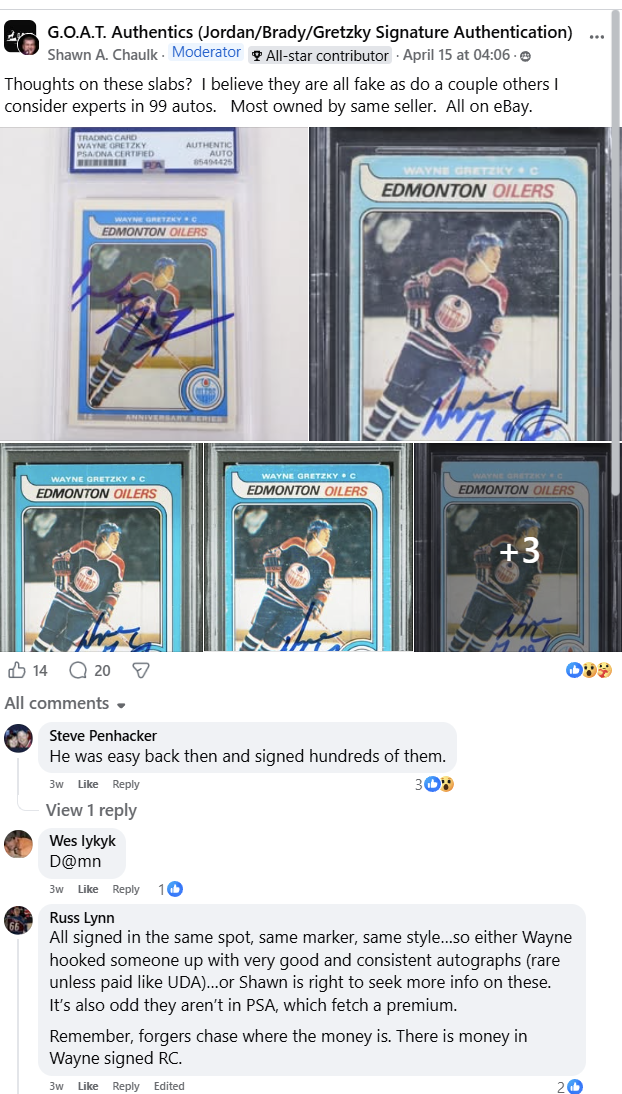
In this case, the warning came from Shawn A. Chaulk, one of the most serious Wayne Gretzky collectors and specialists in the hobby. Shawn posted a group of Gretzky autographs that he believes are fake, even though several of them are sitting inside PSA/DNA and Beckett slabs.
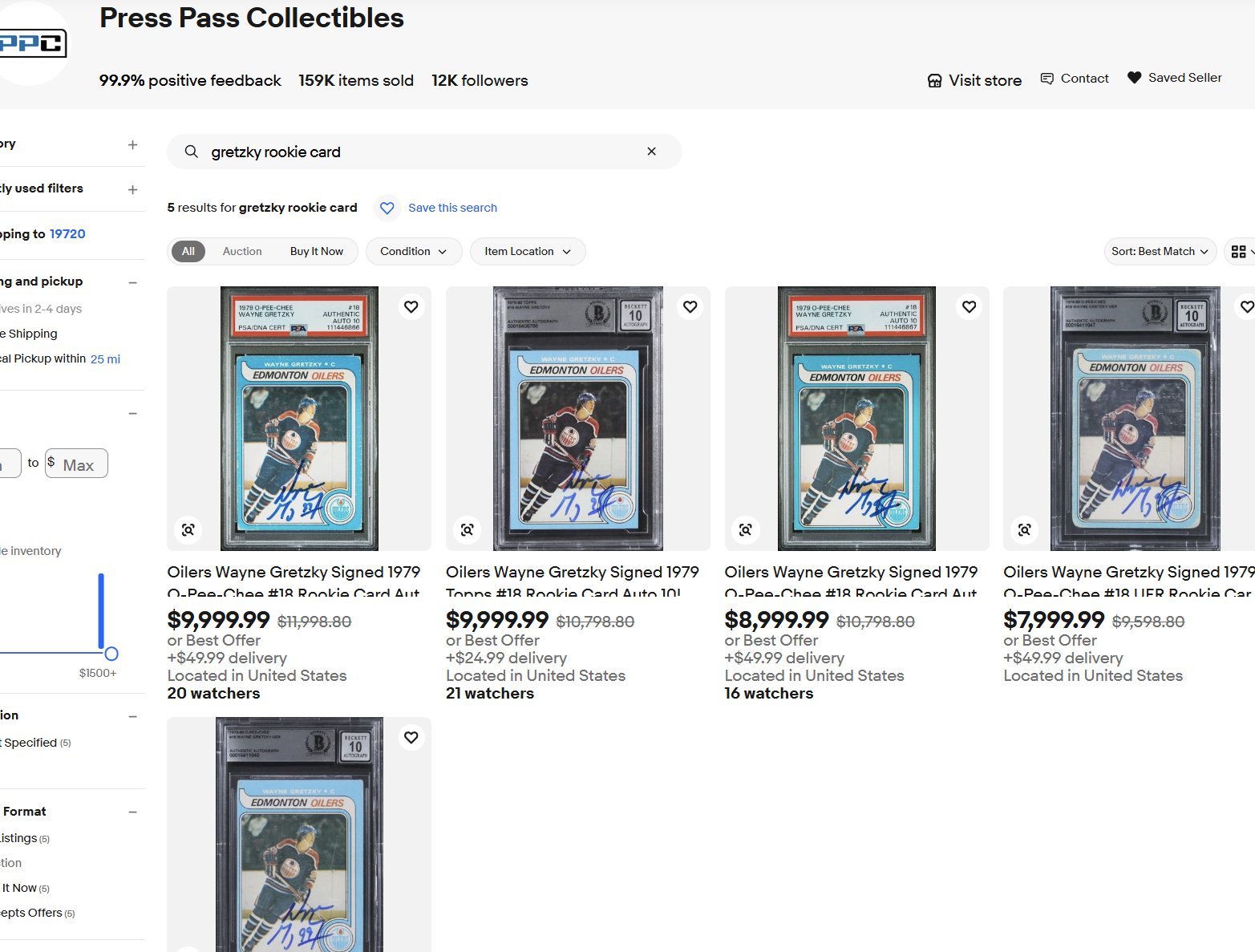
Some were being offered on eBay for thousands of dollars. Screenshots in this file show signed 1979 O-Pee-Chee and Topps Gretzky-style rookie cards listed around $6,299, $7,199, $8,999, and $9,999, with eBay's "Authenticity Guarantee" trust layer shown underneath.
That is the problem. The buyer sees a slab, a cert number, a major authentication brand, and a marketplace trust badge. The collector's guard goes down.
It should not.
The comments under Shawn's original post show the split perfectly. One side leans on the idea that Gretzky was easy to get and signed a lot. The other side notices the more important pattern: same placement, same marker behavior, same style, and too many similar high-value items clustering together.
That is where this stops being a normal authenticity debate and becomes an investigation.
The Press Pass Collectibles Question
One detail makes this case even more interesting: a large part of this visible group appears to be with one eBay seller, Press Pass Collectibles.
That is not a random zero-feedback account. Press Pass Collectibles shows 99.9% positive feedback, 159K items sold, and 12K followers in the saved screenshot. I have bought from them before, including good and rare autographs, so this is not a lazy "bad seller" callout.
It is the opposite. Because Press Pass is a known, established seller, the question becomes more important:
How did this cluster of suspected bad Gretzky slabs get there?
My working hypothesis is not that Press Pass created the autographs. A more reasonable concern is that a forger, or someone upstream from the forger, may be offloading these items through legitimate high-volume sellers or consignment channels. That is exactly how bad material gets washed into the market: it enters through a seller buyers already trust.
This is why eBay and the authentication companies should not only look at individual cert numbers. They should review the submitter path, seller path, consignor history, payout records, and whether the same upstream source appears behind multiple Gretzky slabs.
What Shawn Flagged
Shawn's assessment is direct: the autographs in this group are bad.
The examples include PSA/DNA and Beckett authenticated slabs,
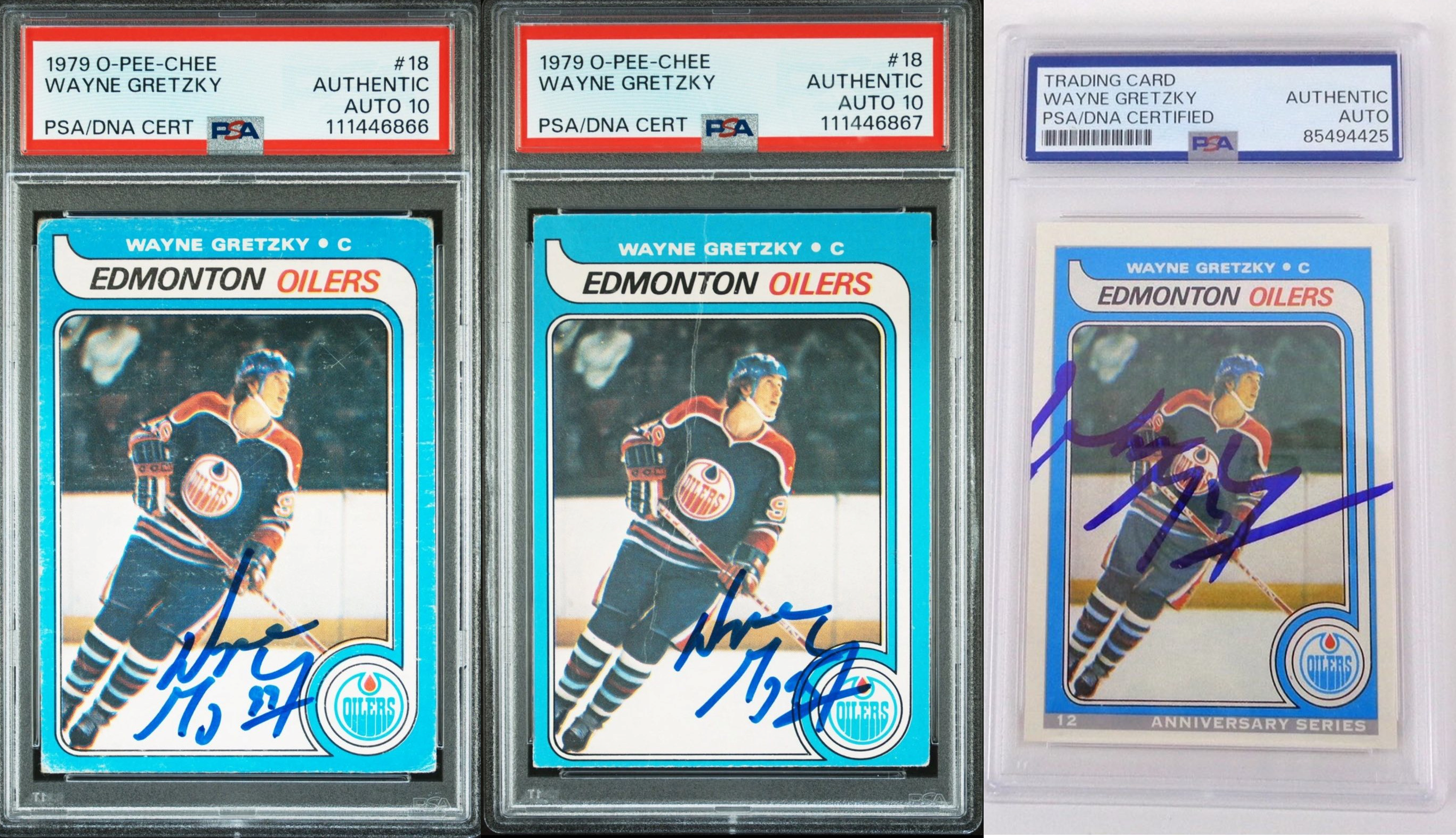
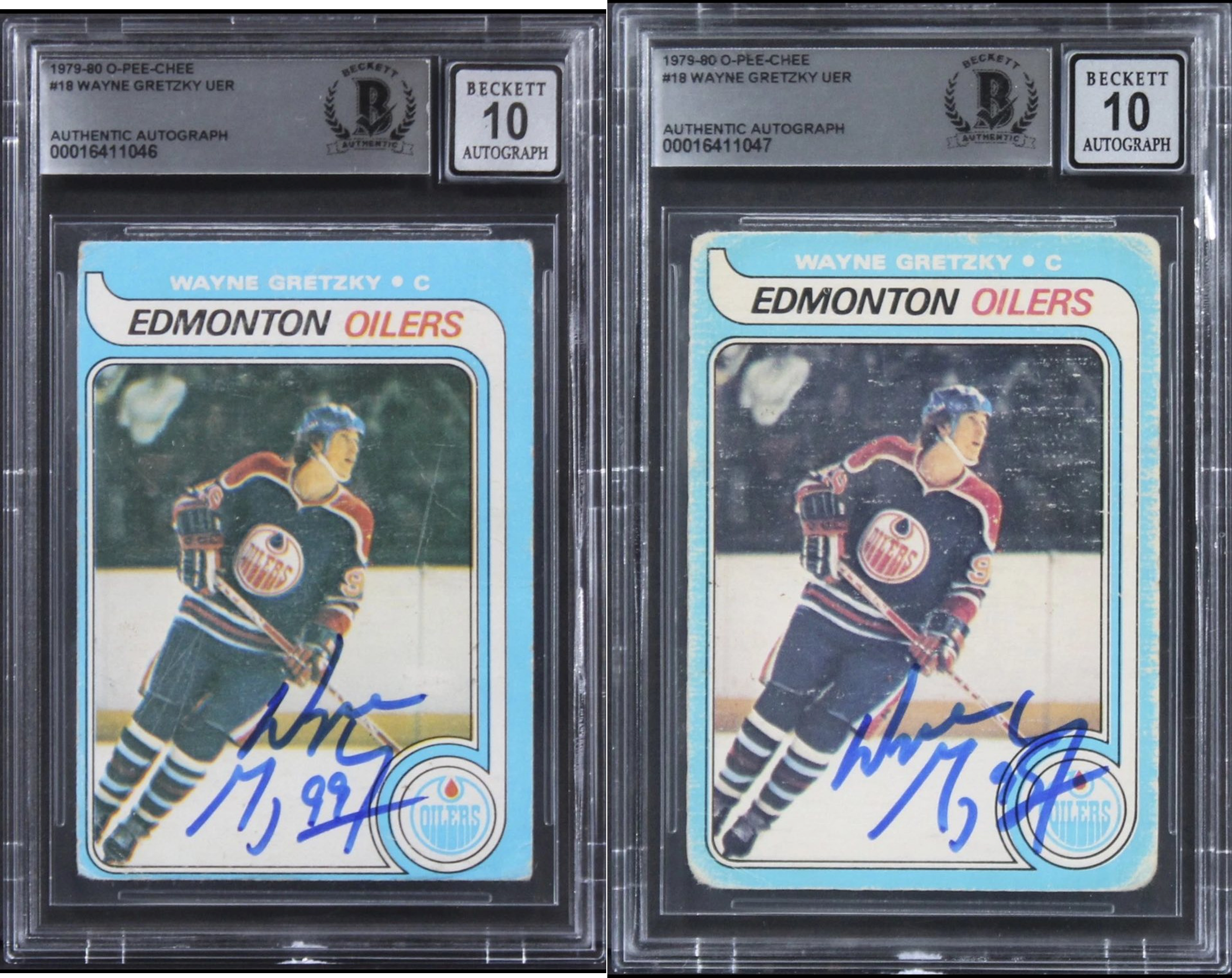
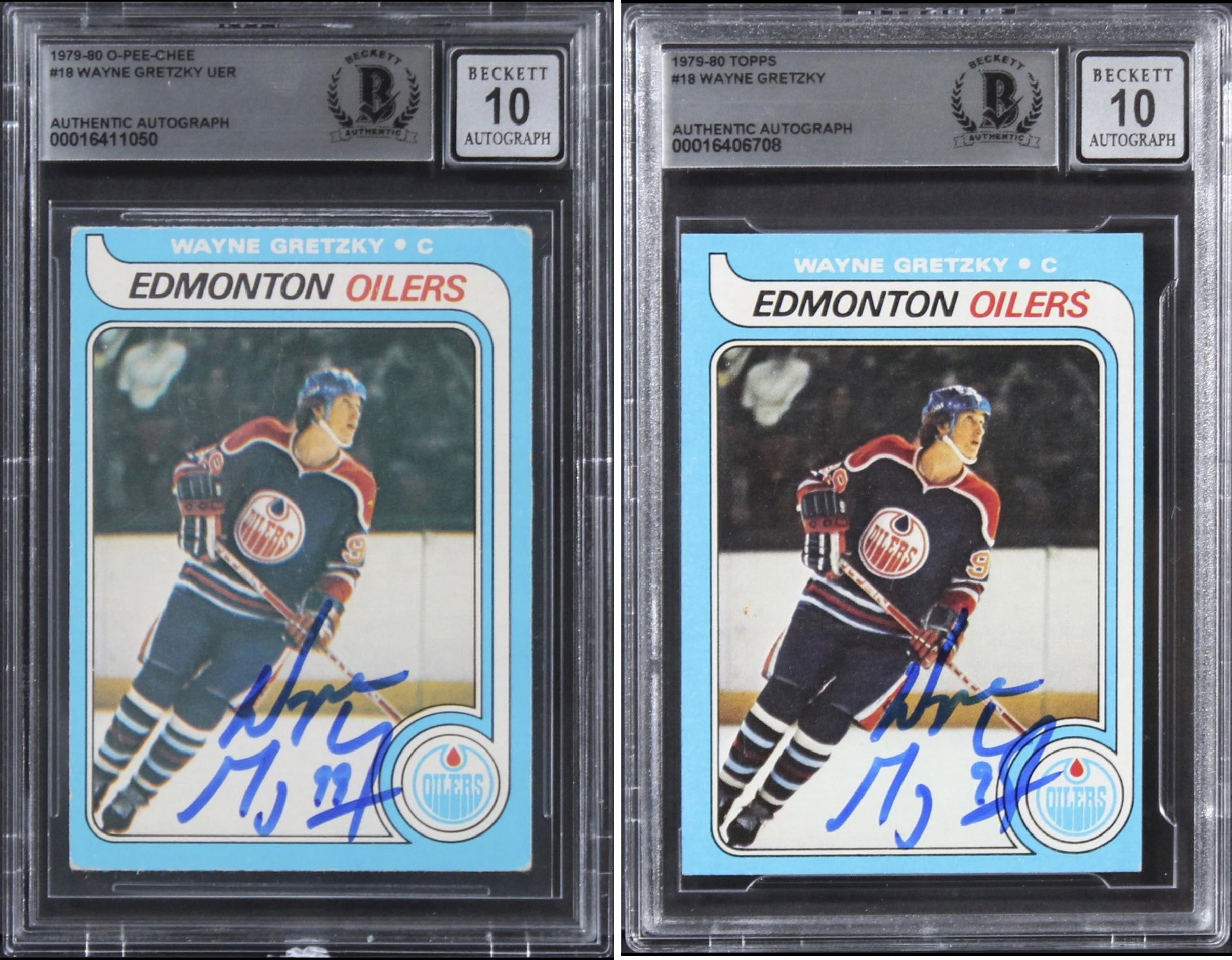
The most important point is not only that individual items look wrong. It is the pattern.
According to Shawn, there is a forger out of Vancouver producing fake Gretzky autographs in large volume.
Shawn also believes that most of the posted examples were made by the same hand.
That matters because a single fake can be explained away as a mistake. A repeated hand across multiple "authenticated" slabs is a system failure.
The cert-number pattern is also worth watching. In the PSA examples I checked, `111446866` and `111446867` are consecutive. In the Beckett examples, the numbers appear close together, including `00016411046`, `00016411047`, and `00016411050`.
That does not prove the full submission history by itself, but it raises the obvious question: were these submitted in small batches, spread out just enough to avoid looking like a mass submission of identical suspicious Gretzky autographs?
PSA and Beckett should be asking that question internally.
Additional Examples from Shawn
Shawn also kindly shared several other examples he has seen from collector inquiries. This second group is not the same as the PSA/Beckett Gretzky rookie-card slab cluster. It is useful because it shows how broad the Gretzky autograph problem is outside cards too.
One jersey-number autograph was bad. One index card was autopen. One photo, in Shawn's view, was signed by a known dressing-room ghost signer. Another card was not only carrying a fake autograph, but the card itself was fake; Shawn said examples of that type were sold on Etsy for around $20.
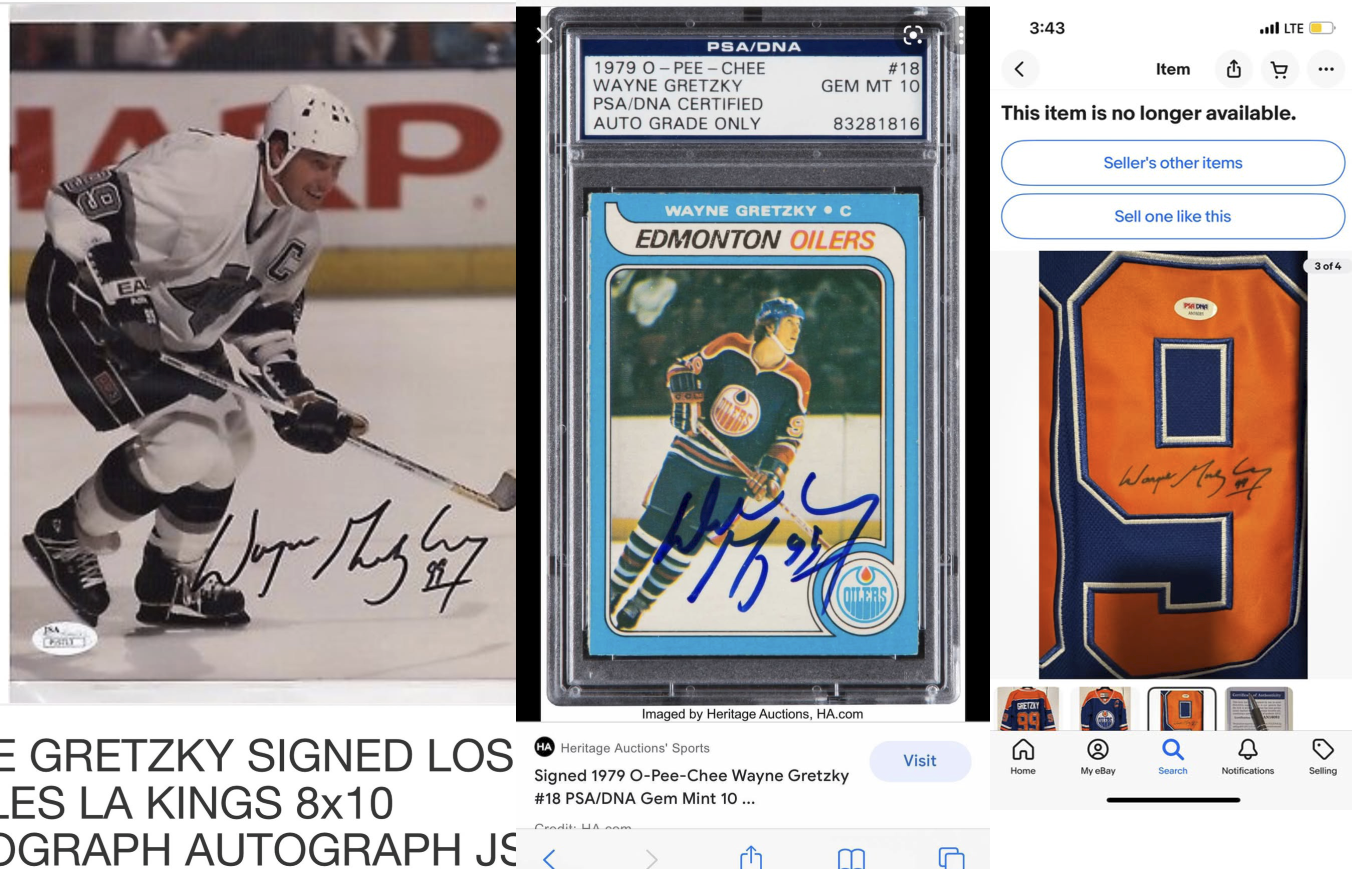
That is the kind of knowledge a database lookup will never give you.
A cert lookup can tell you whether a number exists. It cannot tell you whether the item in front of you is the same item that was certified. It cannot tell you whether a weak autograph belongs to a known mail-return/autopen pattern. It cannot tell you whether the signature matches the correct era of the athlete's signing habits.
That is why specialist knowledge matters.
And this is exactly why I am glad collectors can sometimes reach the best people in the industry for a specific athlete. Shawn has focused on Wayne Gretzky autographs for more than 30 years. He is also an independent authenticator for G.O.A.T. Authentics on Gretzky autographs. It is very difficult to fool someone who has spent that long looking at one signature, one athlete, and one collecting niche.
Steve Grad brings the same kind of high-level industry experience from the broader authentication side. For a case like this, those two perspectives are more valuable than a quick cert lookup.
Why Steve Grad's New Video Matters Here
Steve Grad's new Gretzky video is useful because it explains why Wayne Gretzky is not a simple signature.
Gretzky's autograph changed over time.
Steve Grad also documents that evolution, including the way his signature became faster and more readable by the late 1980s.
Steve's main point, as I understood it, is that collectors cannot authenticate Gretzky by asking whether the signature looks "nice." A clean-looking signature can be wrong, and a rushed-looking signature can be real.
There are several important takeaways:
First, Gretzky mail returns are dangerous. Steve discusses the autopen issue around through-the-mail Gretzky material, especially from the Edmonton era. A collector cannot simply treat an old mailed-back signature as a great authentic early example.
Second, the era matters. Early Gretzky signatures from the late 1970s and very early 1980s can look very different from later examples. The 1980s brought more volume, more public demand, and more rushed signing situations.
Third, modern Gretzky signatures on expensive items deserve extra caution. Steve notes that on valuable items like rookies or rare tickets, Gretzky may sign in a very rushed or "hacked" way because he understands the resale value. That means a perfect-looking modern signature on a high-dollar rookie is not automatically comforting. Sometimes it is the reason to slow down.
This is exactly why the slabs in Shawn's post are so concerning. A major authenticator can verify a cert number and still miss the larger signing-context problem.
The Bigger Hobby Problem
The bigger problem is not only Wayne Gretzky.
It is the way marketplaces, sellers, and buyers treat third-party authentication as the end of the conversation.
For low-risk material, a PSA or Beckett slab can be useful. For high-value, heavily forged athletes, it should be the beginning of due diligence, not the end.
Wayne Gretzky rookie-style autographs are a perfect target for fraud:
the athlete is globally famous;
rookie cards and rookie-style reprints create instant perceived value;
PSA/DNA and Beckett labels create buyer confidence;
eBay visibility turns a questionable autograph into a multi-thousand-dollar listing;
many buyers stop after seeing that the cert number exists.
Advice to Collectors
If you are buying a Wayne Gretzky autograph, especially a high-dollar card or rookie-style item, do not stop at the cert lookup.
Check the era. Check the signing context. Compare with known authentic examples from the same period. Be careful with through-the-mail material. Be careful with perfect-looking signatures on expensive modern items. Be careful when many similar "rare" Gretzky autographs appear from the same seller or the same small cert range.
And when a true specialist like Shawn A. Chaulk says a group of Gretzky autographs is bad, the market should not dismiss that because the label is plastic and the cert number loads online.
That is exactly how bad items become expensive items.
My advice is simple: for serious autographs, go to real specialists. A real specialist opinion is not the same as a database hit, a sticker, or a slab.
It is often the only way to get an opinion that is actually valuable.
Comments 0