PSA LOA Fraud Alert: e4egg, Etsy, Bonanza, and the No-Photo Certificate Problem
This is a smaller case, but it hits one of the biggest weaknesses in autograph authentication databases.
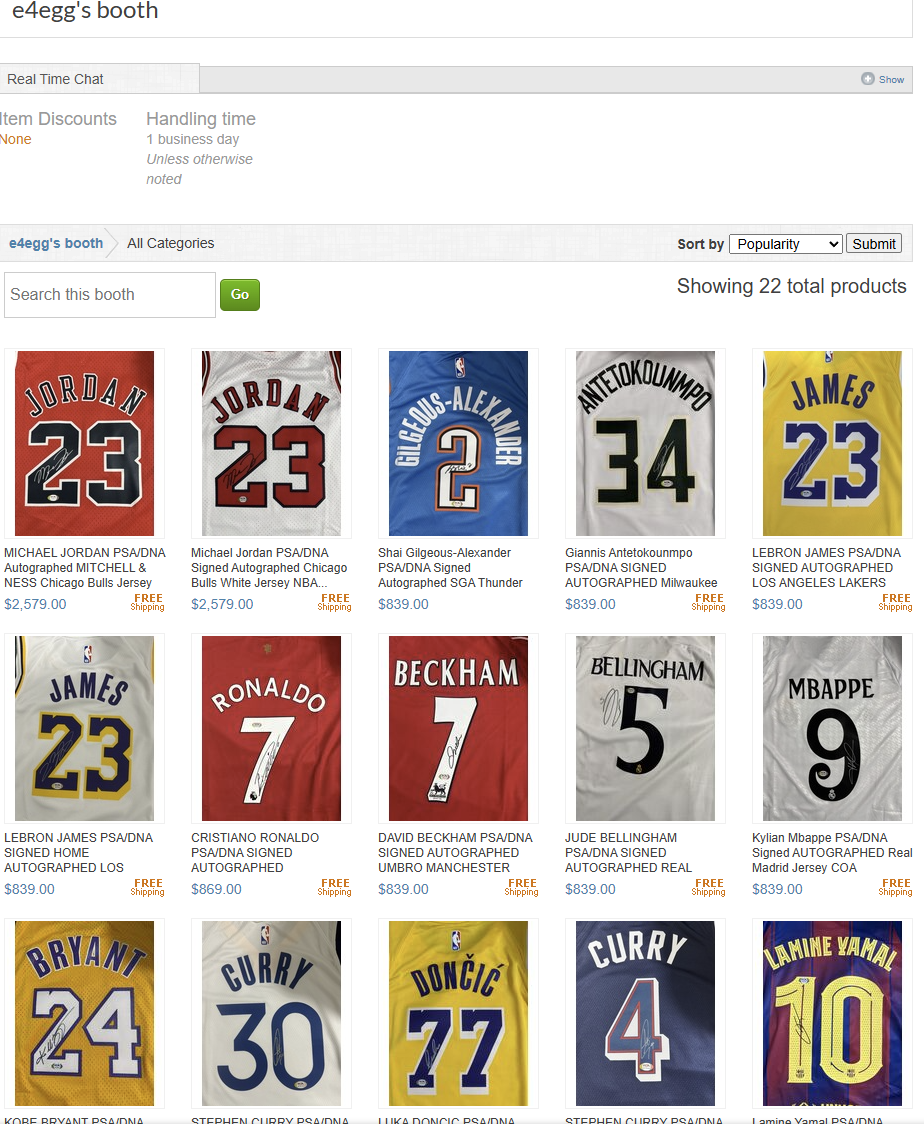
The seller is `e4egg`, based in Hong Kong, selling signed jerseys on Etsy and Bonanza. The inventory is exactly what you would expect from a high-value autograph scam: Michael Jordan, LeBron James, Cristiano Ronaldo, Stephen Curry, Tom Brady, David Beckham, Victor Wembanyama, and other top names.
The trust signal is also familiar: PSA/DNA.
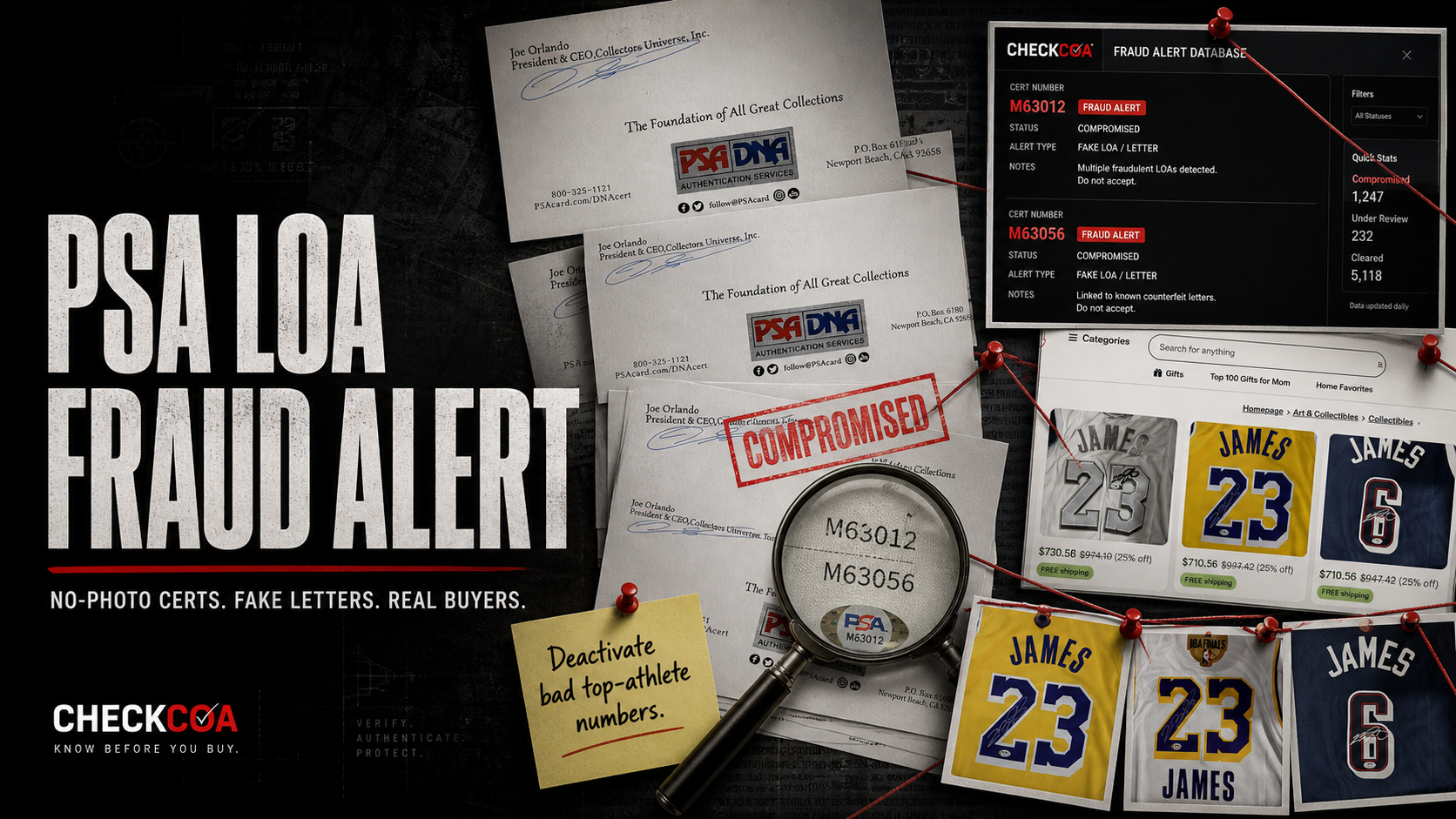
But this case is not just about a bad autograph. It is about fake PSA LOA-style materials built around ordinary certificate numbers that do not have enough public image data attached to them.
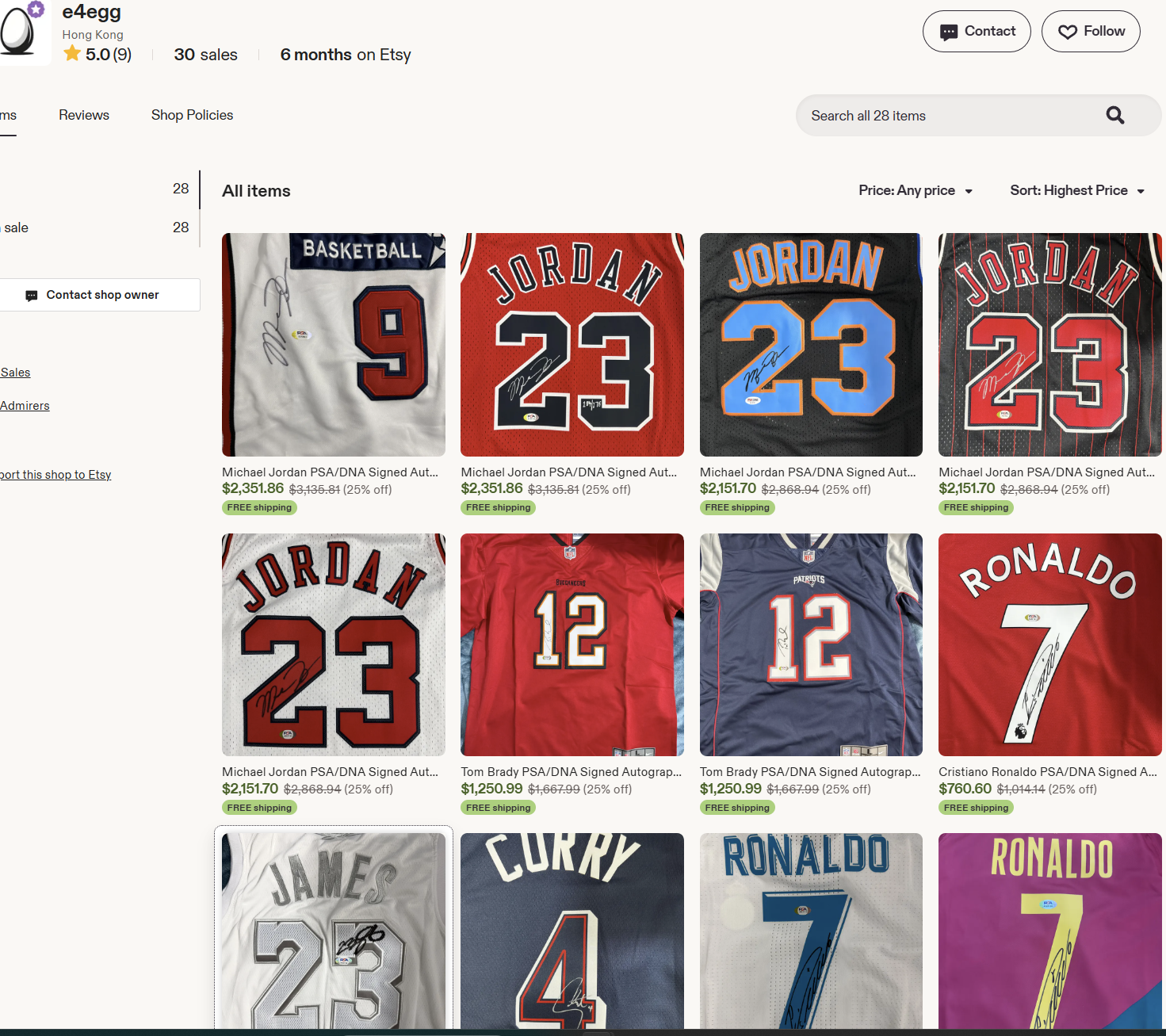
The Seller
At the time of capture, the Etsy shop screenshot showed:
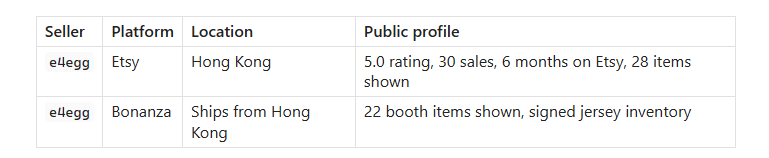
The Bonanza listing format matches the same basic model: signed top-athlete jerseys, PSA/DNA branding, high prices, and Hong Kong shipping.
This is not low-effort junk. The presentation is good enough to fool a buyer who knows PSA is a real company but does not know how PSA/DNA LOAs should look, how old PSA certificate ranges work, or how dangerous basic cert records without public images can be.
The Fake PSA LOA Layer
The strongest part of the scheme is the paper.
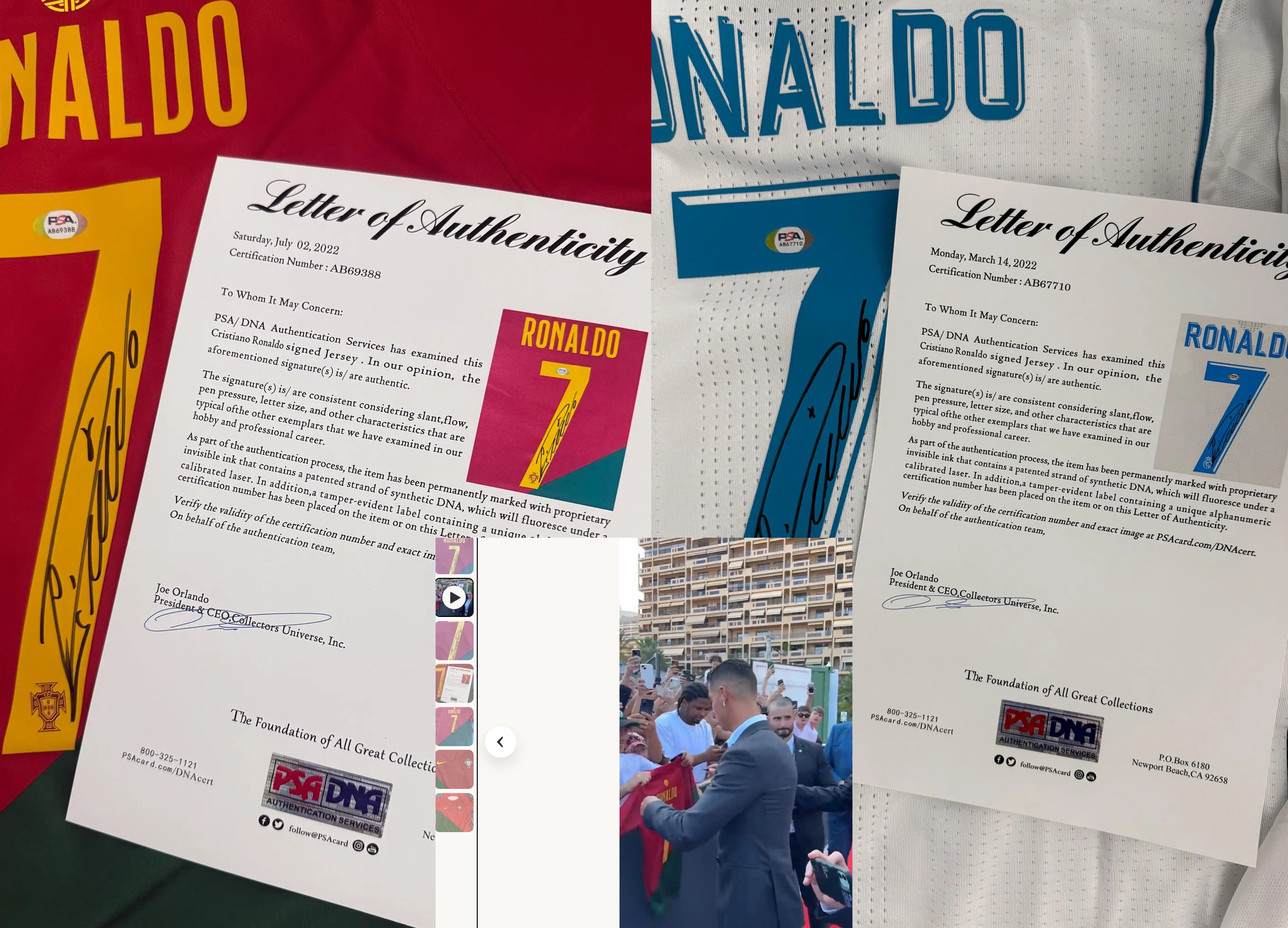
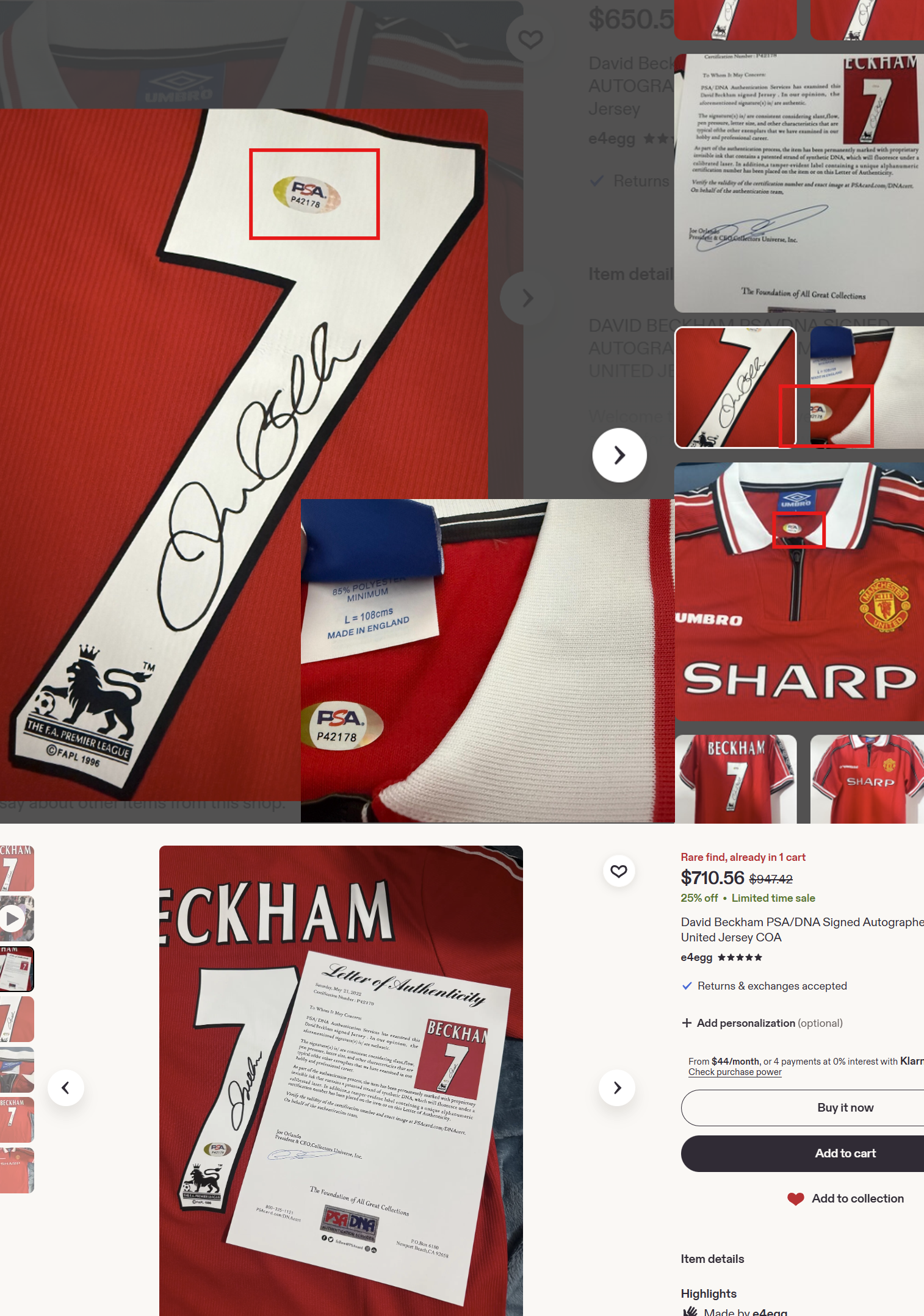
The seller's listings show PSA/DNA-style Letters of Authenticity with a holographic-looking PSA/DNA block, a certificate number, a photo of the item printed on the letter, and an imitation Joe Orlando signature block at the bottom.
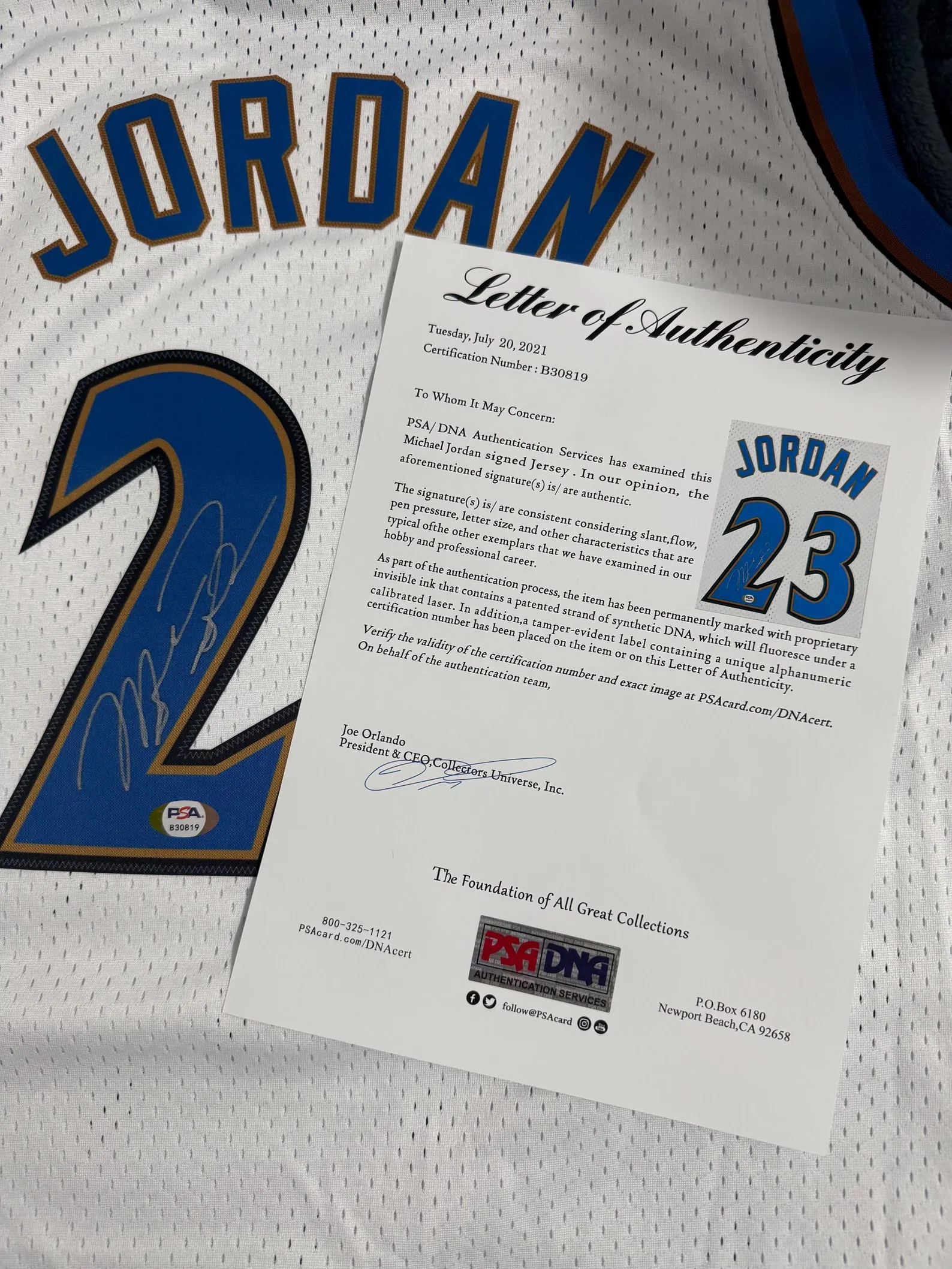
Here is a genuine PSA/DNA LOA reference image for comparison:
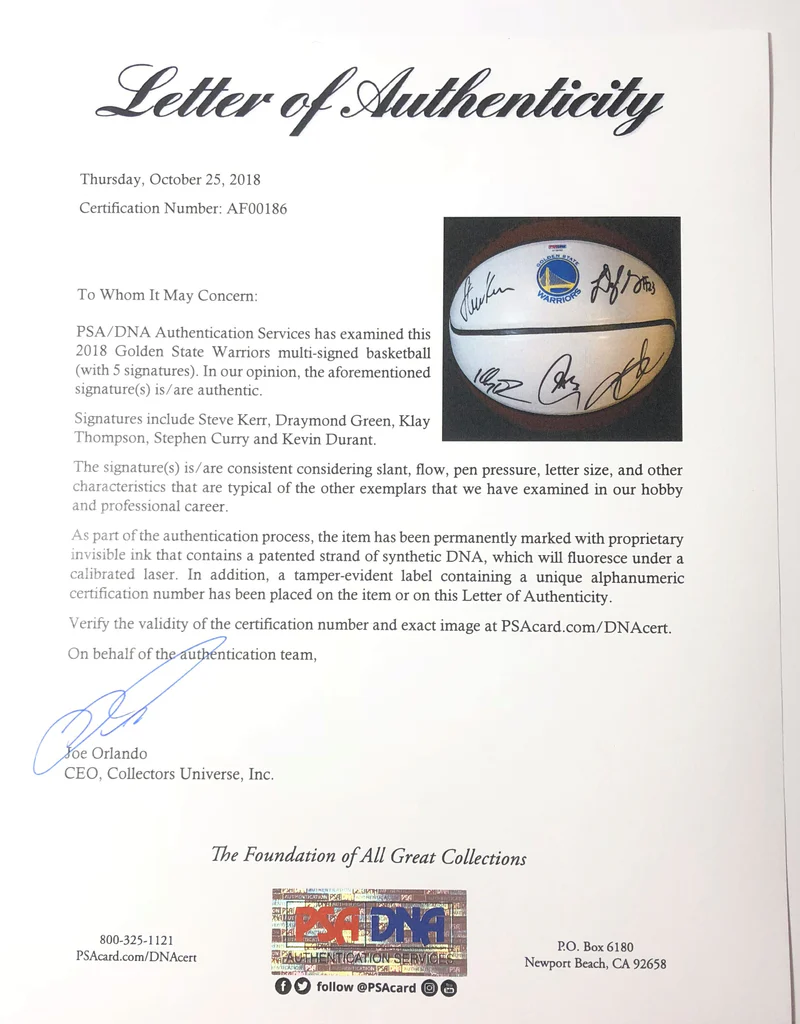
The fake is not perfect. The font, spacing, and overall print feel are slightly off. But for an inexperienced collector looking at an Etsy listing on a phone, it is close enough to be dangerous.
That is exactly the problem. PSA's own 2011 announcement described the PSA/DNA LOA hologram as embedded into the paper, not just a normal sticker placed on top. That kind of feature was supposed to make the LOA harder to duplicate. But once buyers are trained to look only for a colorful PSA/DNA block and a certificate number, counterfeiters do not need to pass a laboratory test. They only need to pass a quick marketplace glance.
The No-Photo Database Problem
This is the part PSA needs to fix.
Many PSA autograph certificate records do not show a useful public photo of the certified item. This happens often enough with both basic certificates and LOA-related records that buyers are trained to accept "no image available" as normal.
That creates a dangerous gap:
1. A buyer enters the PSA certificate number. 2. The number exists. 3. The database does not show a useful item image. 4. The buyer cannot tell whether the missing image is normal PSA database weakness or evidence that the marketplace item is not the certified item.
Scammers exploit exactly that uncertainty.
The fake LOA does not need a fake number. It can take an ordinary PSA certificate number that has no public item photo, recreate a PSA/DNA-style letter around it, add a holographic effect, forge the Joe Orlando signature block, and present the result as if the number supports a real LOA.
That is not a buyer problem. That is a database-design problem.
The LeBron M63 Cluster
The LeBron James examples are the clearest policy failure.
I have already highlighted the `M63...` LeBron certificate-number series in previous posts. It is a known suspicious cluster used repeatedly by autograph scammers. There are roughly 70 numbers in this range, and PSA should deactivate the entire bad cluster for top-athlete autograph use instead of selectively disabling only a few numbers.
From `e4egg`, CheckCOA has already logged these `M63...` LeBron records:
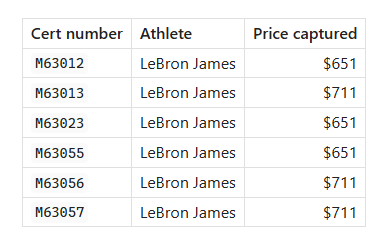
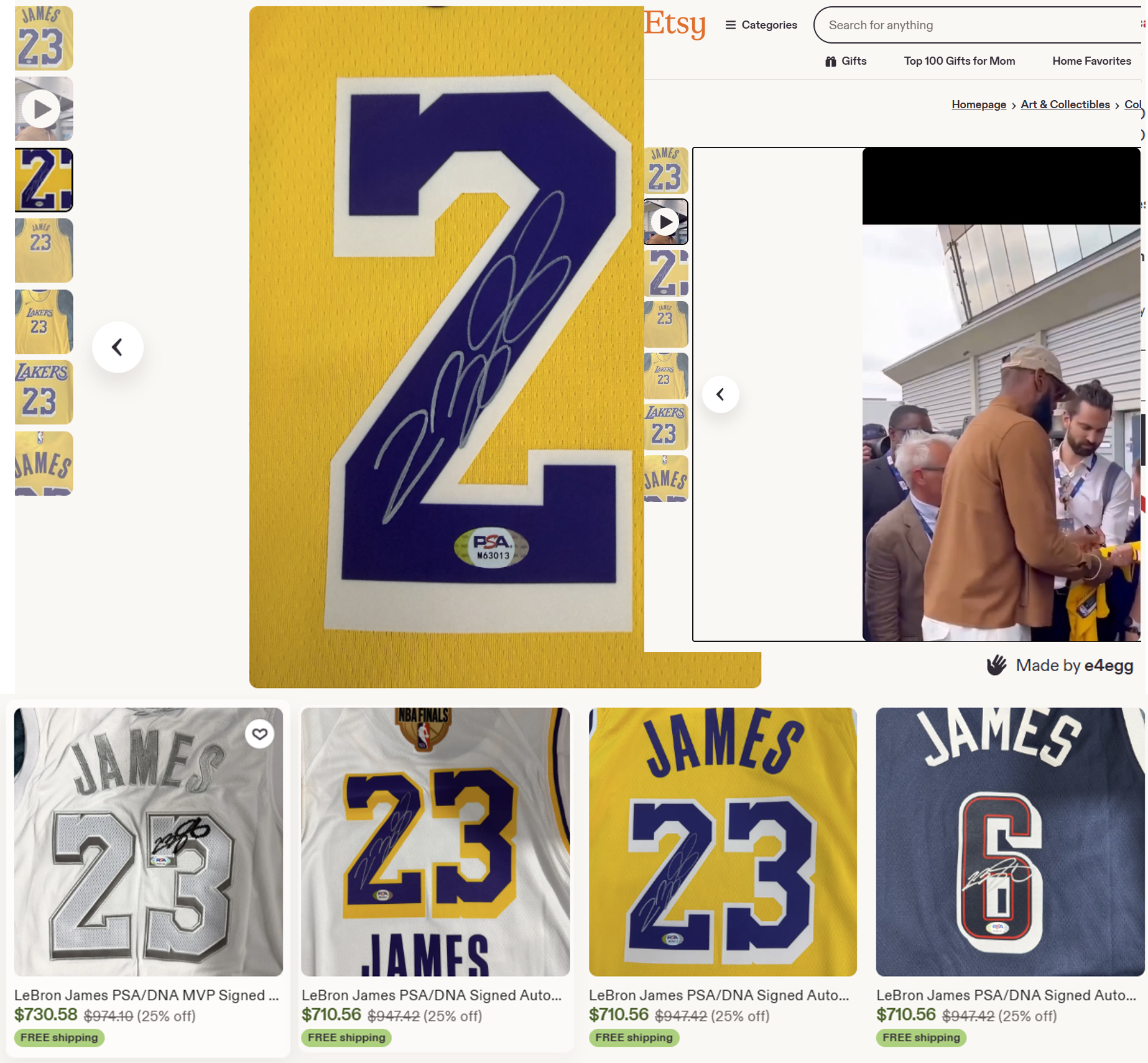
This is not just one seller using the range. CheckCOA also found exact cross-seller reuse involving `e4egg` cert numbers:
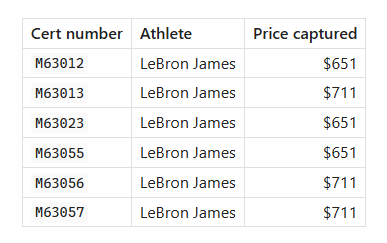
That is the reason I keep saying PSA needs to shut down bad top-athlete certificate clusters, not just play whack-a-mole with individual numbers after collectors get scammed.
Two PSA Stickers, Because One Was Not Absurd Enough
Some listings are unintentionally funny in the worst possible way.
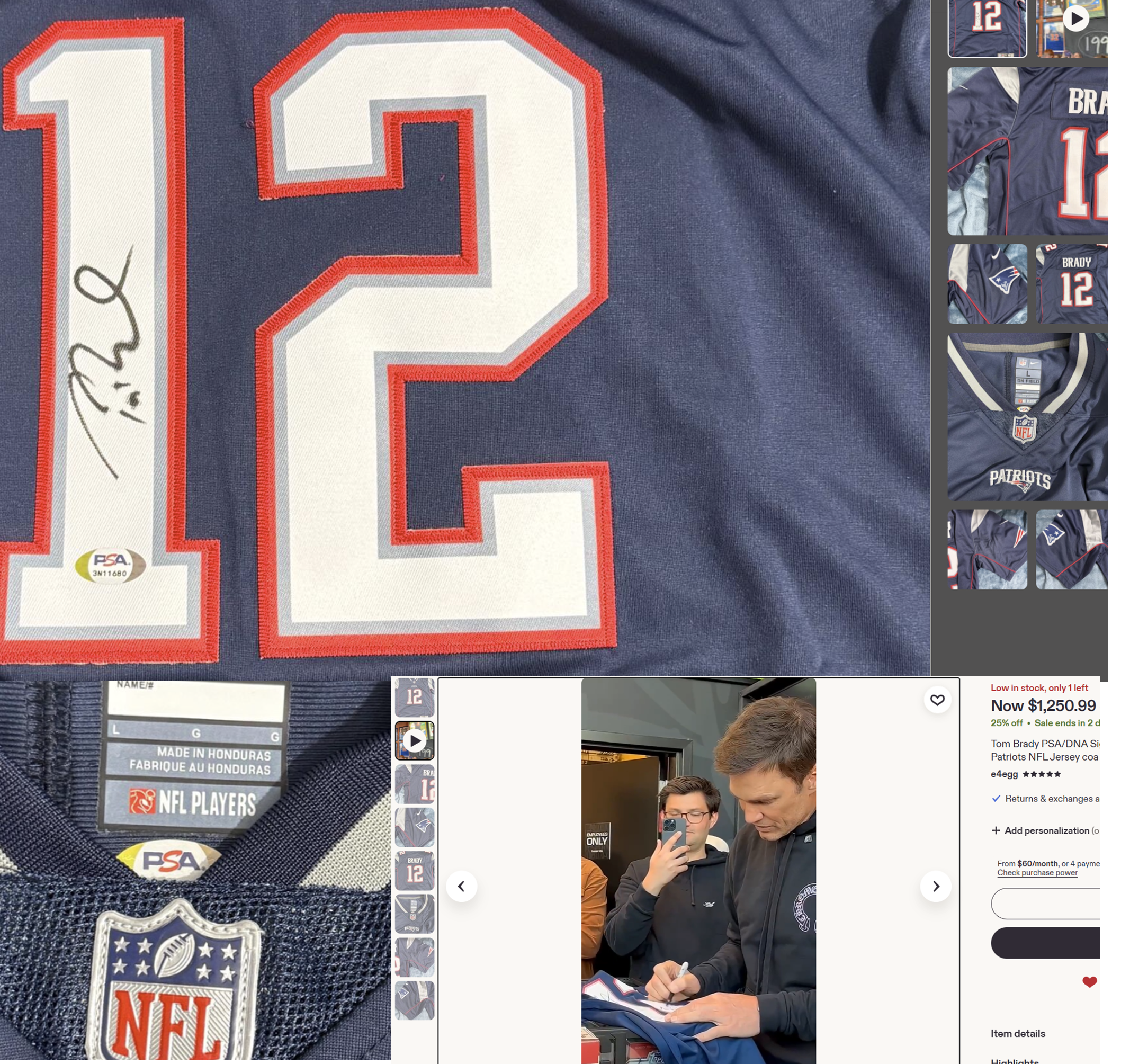
On the Tom Brady example, the jersey appears to show a PSA sticker on the number and another PSA sticker inside the jersey near the tag area. Apparently one PSA sticker was not enough. The shirt needed a second authentication sticker inside like a warranty label.
This is the kind of detail that should make marketplaces stop and review the seller. A real authentication process does not become more convincing because a counterfeit-style presentation adds more stickers.
What CheckCOA Logged
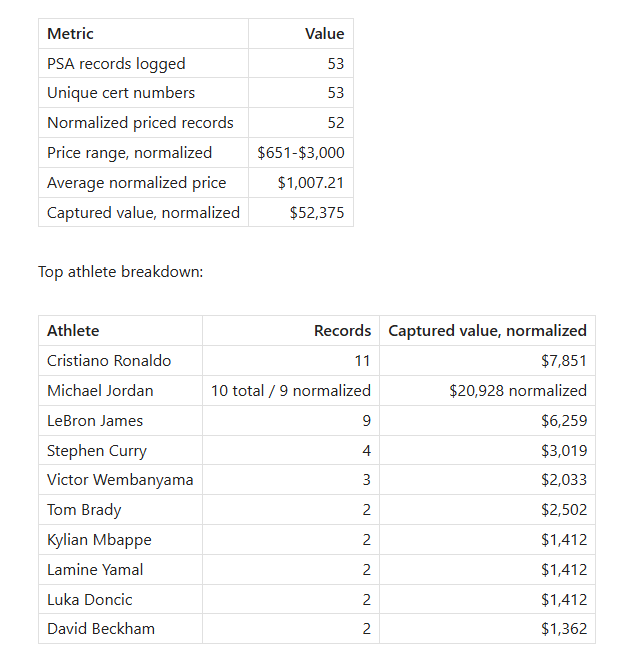
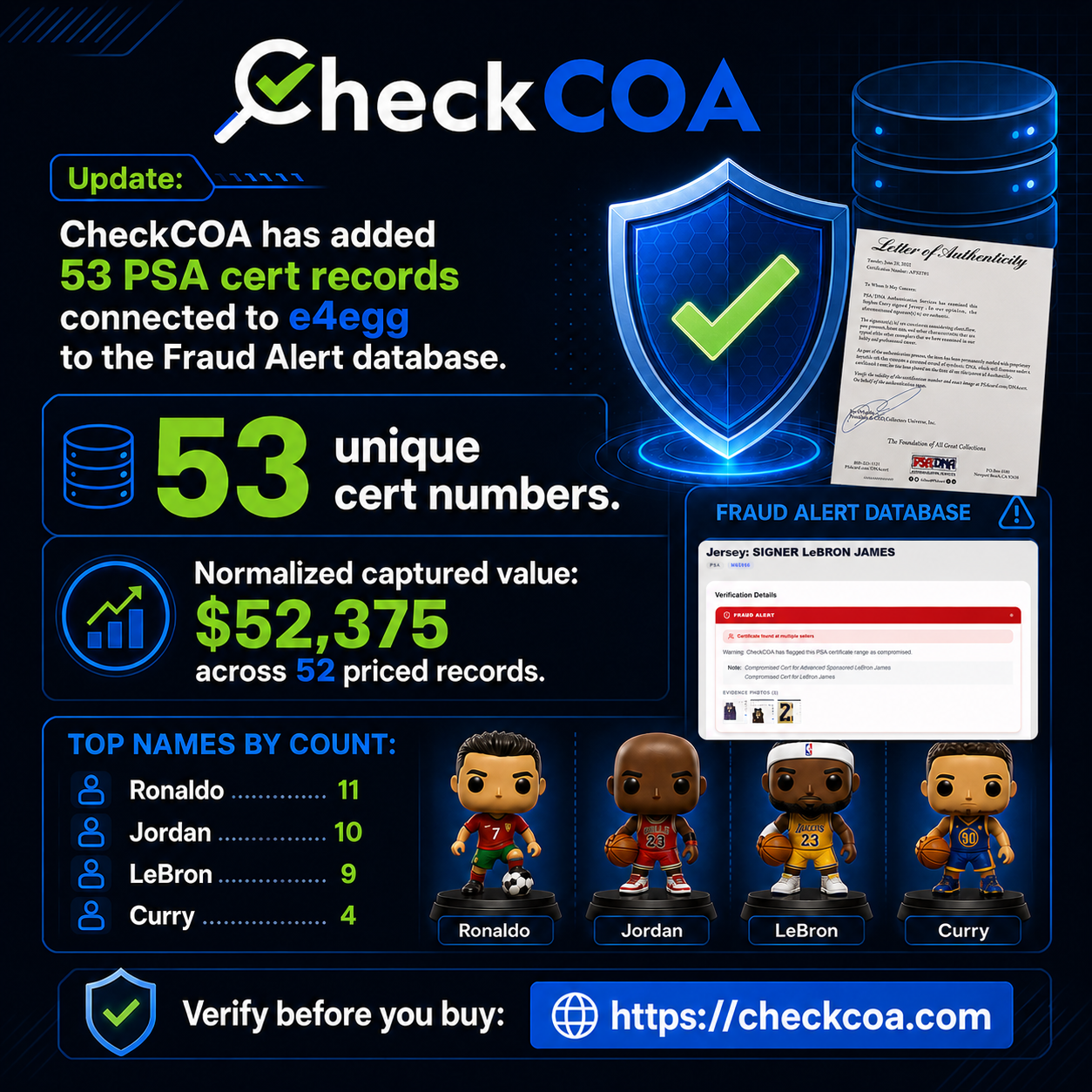
CheckCOA has already added 53 PSA records connected to `e4egg` into the Fraud Alert database.
All 53 records are PSA-branded autograph certificate records. There are 53 unique cert numbers.
One record has an obvious price-normalization outlier in the database (`AI09125` is stored as `313681`), so I am excluding it from the public captured-value total until the price is cleaned. On the normalized 52 priced records, the captured listing value is:
Joe Orlando Should Care About This
Joe Orlando is not the current PSA president. He is the former president of PSA/DNA and former CEO of Collectors Universe. That distinction matters.
But his name, old title, and signature-style mark are exactly what these fake LOA-style documents are using as a trust signal.
That should bother PSA, and it should bother anyone who helped build PSA/DNA's reputation.
All identified `e4egg` certs from the current pass have been added to the CheckCOA Fraud Alert database.
Comments 0